Rallying venues Throughout these last few chapters we have looked at many different areas influencing energy efficient motorsport such as materials used and construction techniques required for vehicles, fuels and their alternatives and new green technologies being used in Motorsport, but we are still yet to look into the spectators of motorsport events and their impact upon the environment, as well as their overall carbon footprint.  Unlike circuit venues, rally circuits are held in unrestricted areas that are fully open to the public at any time of day. This instantly makes the issue of containing the fans and public a lot more complicated than at a contained racing circuit, in which there will usually be certain points of entry and exit. Any environmental damage such as ground disturbance or littering incurred during rally events, is considerably harder if not impossible to locate and manage in comparison to racing circuits where measures of control may be put in place to ensure that no damage or vandalism is caused during events. Over the years rally drivers have personally witnessed this inability for event organisers to contain and monitor rally fans, with numerous incidents occurring when fans have been too close to passing vehicles and have ended up getting injured or even killed. Energy Efficient Projects Wind Farms – This method of energy generation consumes no fuels and emits no air pollution, though it is important to mention that the overall environmental benefits gained from such methods of electricity generation are very much long term rather than short term. Solar Panels – By installing solar panels throughout race circuits this would no doubt aid in reducing electricity bills, but like that of wind farms they are costly to install initially so any money saved or benefits gained would be very much long term.  Energy efficient appliances – When replacing old electrical appliances, makes sure any replacing electrical appliances carry an energy label ranging from G to A. This is particularly efficient if lots of electrical appliances e.g. TVs, digital displays, refrigerators etc are located throughout the race circuit in question. So to conclude, the majority of today’s energy efficient programs have a significant positive environmental impact in the long term rather than instantly. This is mainly due to the fact that solar panels and wind turbines are significantly expensive to install and the energy consumed to manufacture and transport such devices is significantly large, so any profits made will not be noticed until later years of the program. Recycling Littering is a big issue at today’s motorsport venues due to the vast distribution of food, drink and venue information/ event programmes. For this reason the concept of recycling is becoming ever more popular, with such recycling projects including: - The provision of clearly labelled recycling bins in which the public can dump their recyclable waste.  - Introduction of recyclable/bio degradable packaging for food, drinks and consumable items. - The introduction of mobile downloadable information programmes in order to reduce the amount of unused and littered leaflets and paper information left on site. - The construction of race circuits with removable seating and structures could allow for equipment to be taken down and used at other event locations when not in use. - A similar style of recycling can be found in America with sport seating often being reused at varied sports venues. By doing so this means that extra effort and pollution does not have to be generated in the process of making new seats. Ground Poaching This is an adverse side effect that can occur at racing circuits where grass and soft ground is present and when large numbers of spectators gather on ground that is not specifically suited to such vast volume of footfall. This is made considerably worse in wet weather conditions, where the grass turns to mud under foot and the ground is required to be re seeded in between race meetings. This is very much impractical and costly for the landowner, not only this but it has considerable negative environmental side effects, as the ground disturbance will upset the balance of the local ecology. It is not only wet weather but also dry hot weather that influences ground poaching as this result in soil and grass turning to dust and eroding the surrounding land. 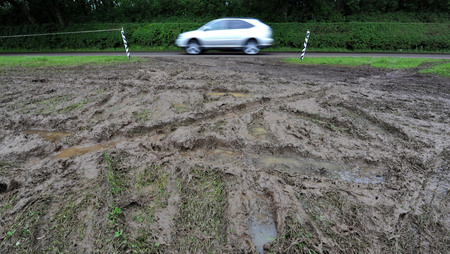 This year’s Silverstone F1 grand Prix witnessed major issues with intense rain fall resulting in the grounds of the circuit becoming water logged and impassable for the spectators, though thanks to an increase in temperature on race day this allowed for another fantastic British Grand Prix. | Public Transport The majority of today’s Motorsport fans will usually use their own personal method of transportation to get to the race circuit in question, though as the amount of drivers on the road constantly increases, so does the level of traffic generated due to increasing demand for popular motoring series such as F1 and the BTCC.  In an effort to decrease the amount of vehicles used, circuits are now introducing public transport to and from the racing circuits. Not only can this save fans and spectators significant amounts of time and money but it also aids in decreasing the level of emissions produced from spectators’ vehicles. This is no doubt a feasible option for racing circuits and can already be seen to be used by such major UK circuits as Silverstone, Donnington and Brands Hatch. Silverstone currently has a free Park & Ride service that is used during Saturday and Sunday of the British Grand Prix. Electric Charge Points & Bio fuel Production Though electricity companies would be able to currently cope with this additional demand for electric vehicle charge points at present, this would purely be down to current lack of electric vehicles, be that both competitive and public, that are currently available for purchase.  Though in the future if such electric technologies were to pick up, existing charging points would no doubt help to influence competitors and the public to take full use of this service and buy into green electric technologies both at and way from race circuits. By this point I am assuming that electricity companies will be fully aware of electric vehicle requirements and that charging points would not cause too many issues. Another suggestion is for circuits to aid in the production of bio fuels through the growth of crops within the circuit grounds, though by doing so this could come with some disadvantages such as: - Health & safety concerns to the public with regards to any chemicals being sprayed on the crops - Extra added costs for the race circuit in terms of maintaining the crops and producing bio fuels. - The possible use of flammable substances that would be used at the end of crop harvesting - Transportation devices used for crops could interfere with on-going motorsport events - Damaging ecological or environmental areas of importance in the growth of the crops  To ensure that the bio fuel crop is grown in a responsible and safe manner the following safety measures could be put in place: - Providing adequate health & safety signage - Though crops may be being grown we have to ensure that the space used to grow these is not an area that was of ecological and environmental importance. - Ensuring any harvesting machinery or vehicles are kept safe and away from the public. - Any flammable substance to be used when the circuit is not in use to minimise the possibility of any injuries etc. - Correct storage of any flammable or dangerous fluids and gasses - Any crop fields would be required to be successfully protected and guarded from external physical contact Green Racing Circuits Nominated as the most environmentally friendly circuit in Britain, the Anglesey circuit was rebuilt back in 2007 with the environment being one of its key concerns. Such factors which make this circuit so green include: - On site quarrying for materials was carried out in the initial stages of building rather than shipping tonnes of rock from other areas. - Electricity is provided to the circuit by wind turbines and with surplus energy channelled to the National Grid. - The first circuit to sign up to the Energy Efficient Motorsport programme - Took into account the importance of SSI’s and their importance within the local habitat, so thy transplanted heather to maintain the habitat for the local wildlife. - The asphalt track surface was laid cold in an effort to save energy - “In January 2009, the circuit was honoured to receive the top prize in the Tourism and the Environment category at the Anglesey Tourism Awards.” 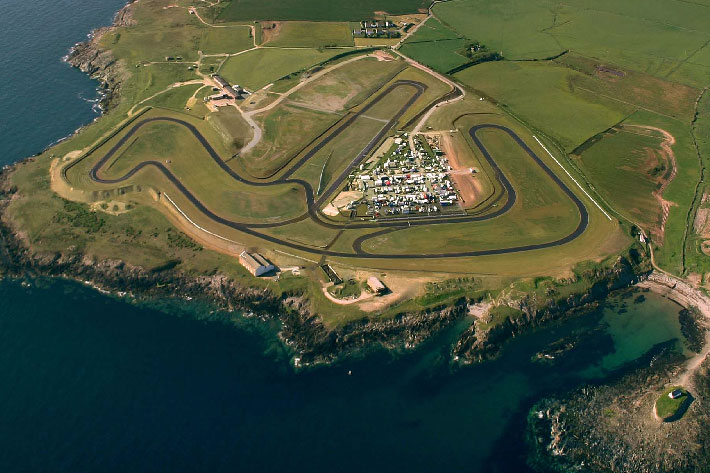 |
