The Greenhouse Effect “The greenhouse effect is a process by which thermal radiation from a planetary surface is absorbed by atmospheric greenhouse gases, and is re-radiated in all directions. Since part of this re-radiation is back towards the surface and the lower atmosphere, it results in an elevation of the average surface temperature above what it would be in the absence of the gases.” The processes involved: 1. The suns radiation passes through the earth’s atmosphere. Though some is reflected by the atmosphere and earth. 2. The majority of the sunlight’s energy is absorbed by the Earths Sea and land. 3. Heat is radiated outward from the warmed earth’s surface. 4. Some of this radiation is re-emitted by greenhouse gas molecules. This in effect warms the earth’s surface and troposphere, resulting in increased temperature 5. Other lost infrared radiation passes back through the earth’s atmosphere and is lost within space. 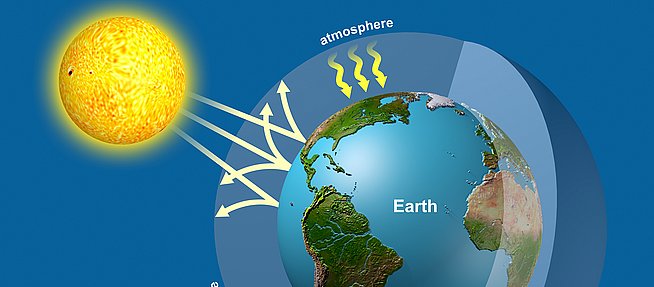 In the case of the level of greenhouse gasses such as carbon dioxide and methane increasing, this would further result in an increase of the amount of infra-red energy becoming trapped within the earth’s atmosphere. The end result being an increase in the earth’s atmospheric and surface temperature. Carbon Dioxide A colourless and odourless gas, carbon dioxide is produced both naturally and through human activities, such as burning coal, gasoline, wood and oil. Not only this but the overall CO2 levels in the air are influenced by the CO2 that is present in the air that we exhale. “Carbon dioxide (chemical formula CO2) is a chemical compound composed of two oxygen atoms covalently bonded to a single carbon atom. It is a gas at standard temperature and pressure and exists in Earth's atmosphere in this state. CO2 is a trace gas comprising 0.039% of the atmosphere.” Carbon Footprint The total amount of greenhouse gases produced both directly and indirectly through human activities, will be usually expressed in the equivalent amount of tons of carbon dioxide produced. Factors required in order to calculate a carbon footprint include: • Carbon footprint is usually calculated within the space of a single year • Country in which calculated • Distance driven, fuel type, engine size, fuel consumption • House heating and type used (Oil, gas and coal) • Method of transport used (Bus, train, plane etc.) • Food consumption (Use of plastic bags/containers) • Operation of household electrical equipment  Other greenhouse gasses such as methane and ozone are also taken into account. These other gasses would be converted into the equivalent amount of carbon dioxide required, to result in having the same effect regarding global warming. The use of such a tool as a carbon footprint calculator is extremely influential in providing the consumer with a much greater understanding, regarding the levels of carbon dioxide produced from their daily activities. Introducing and promoting such devices will hopefully assist in controlling today’s level of global warming produced. 98 RON Unleaded fuel • Improved fuel efficiency, due to the engine making better use of the energy within the fuel. • Such premium fuels usually contain more effective detergent additives, therefore helping to keep engine internals such as valves and the combustion chamber clean and working efficiently. • “An additional advantage is that, due to their different composition, "premium" fuels are typically two or three percent more dense than "normal" fuel, which means that each litre contains two or three percent more mass of fuel, and hence two or three percent more energy.” • Depending on the characteristics of the engine in question, the added benefits of the higher octane fuel can range from nothing, to up to a 10% increase in power and torque.  Level of carbon dioxide produced from one litre of petrol – 2.35kg of C02 Level of carbon dioxide produced from one litre of diesel – 2.65kg of C02 Level of carbon dioxide produced from one litre of methanol – 1.20kg of C02 “Also known as wood alcohol, methanol is a convenient liquid fuel made from natural gas, coal or renewable resources. Methanol can also be used as a transportation fuel, as a hydrogen carrier fuel for fuel cell technologies, and a fuel for electric power generation. With the chemical structure CH3OH methanol is the simplest alcohol, with the lowest carbon content and highest hydrogen content of any liquid fuel.” In terms of pollutants and C02 produced diesel is the worst of the three, producing over 0.30 kg more co2 per litre than petrol and 1.45 kg more than methanol. Though if we were to consider the miles per gallon gained out of each of thesefuels, we would come to the conclusion that diesel achieves the largest amount of miles per gallon. | Calculating Carbon Footprint Provided below is a list of factors required to calculate a rough carbon footprint for a two car race team competing in all rounds of the 2009 British Formula Ford Championship: • Fuel used throughout season – both Formula Fords, Team member transportation, drivers parents and spectators. • Food and drink – drivers, team members and family • Distance driven – Formula Fords, Team transportation and family  • Methods of transport used – train, bus and plane etc • Electricity used – laptops, mobile phones, cameras etc • Electricity used by circuits • Waste produced by events – flyers, food packaging, posters, tickets and general rubbish disposal etc. • Physical damage to landscape – spectators, spillage of oils or coolants. • Disposal of used racing parts – oil, coolants and tyres • Importing of required equipment for season - manufacturing pollution Methods to reduce carbon footprint • Ensuring minimum vehicles are used to transport family, team and drivers • Use of public transport instead of personal vehicles • Provision of correct bins at race circuits(plastics, glass and paper) 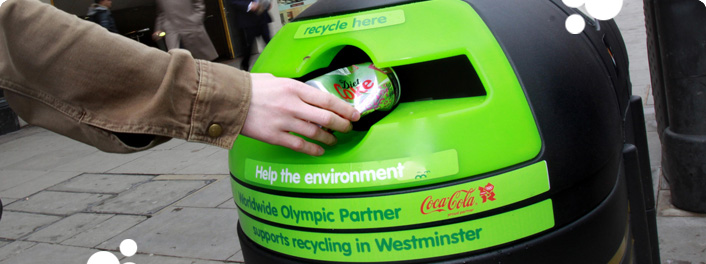 • Ensuring used oils and coolants are stored and disposed of correctly • Planning of routes to circuit ensuring minimal miles are driven • Minimal testing in-between races to keep amount of fuel used down • Turning off gas and electricity when not in use • Re using packaging • Provision of food and drink prior to event • Promoting event via social media rather than printing flyers The removal of lead from petrol “In 1922, an American called Thomas Midgely found that if tetraethyl lead, was put into petrol, particles of lead and lead oxide are formed on combustion. This helps the petrol to burn more slowly and smoothly, preventing knocking and giving higher Octane ratings.” Though helpful in terms of producing higher petrol octane ratings and increasing vehicle performance, lead is considered to be environmentally dangerous when dispersed from the exhaust, not only this it also poisons today's catalytic converters which are used to reduce the production of such harmful gasses as nitrogen ad carbon. It is for this reason that other chemicals have been incorporated into petrol to aid in reducing the negative environmental impact produced from lead, these include: Benzene • An aromatic hydrocarbon compound, in its normal state it is a colourless organic liquid with a boiling point of 80.1 degrees Celsius. 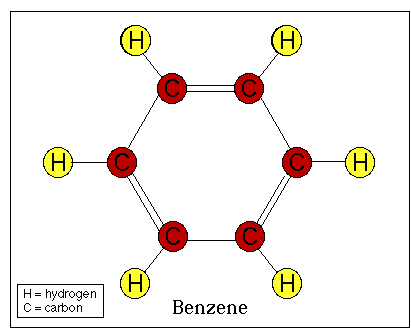 • Long term exposure may affect bone marrow and blood production,individuals exposed to benzene have developed and died from leukaemia. • Short term exposure can result in drowsiness, dizziness, unconsciousness, and death Toluene • Also a colourless organic liquid, it has a boiling point of 110.6 degrees Celsius. Though mainly sourced via vehicle emissions, other contributors include petrol fuel storage facilities, toluene based solvents and thinners. • Health effects associated to toluene exposure primarily relate to impairment of the central nervous system. • Exposure of the chemical has also been linked to hormonal imbalances, which may affect reproduction and foetal development. Though it should be said that these effects have been observed at exposure concentrations significantly higher to that of typical outdoor levels. Methyl tert-butyl ether • Otherwise known as MTBE, is a volatile, flammable and colourless liquid that is sparingly soluble in water. Its main purposes as an oxygenate, are to both raise the octane number whilst replacing the banned tetraethyl lead. • Possible health effects include irritation to the eyes and skin, nervous system disturbances and chemical pneumonitis in the case of aspiration.  |
