The F1 Tub The tub of an F1 car, or otherwise known as a monocoque, carries out the job of being the main structural component and safety device for the vehicle. Similar to that of the rest of the vehicle, the tub is constructed from carbon fibre, with some areas of the tub having up to 60 layers. The strong and light honeycomb structure inside is protected by high-density woven laminate panels. Such materials are used for the construction of the tub, so to ensure it is as strong and light as possible, so to ensure the best possible performance gained. 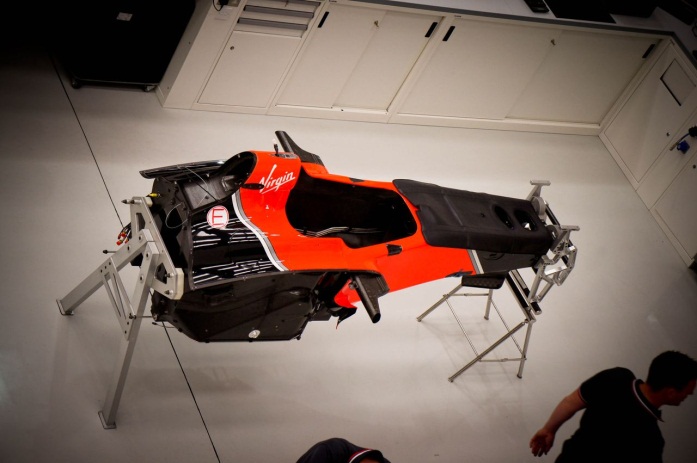 Deformable crash protection structures surround the tub, so to ensure that in the case of an accident the energy generated, is absorbed not purely by the tub but also by the bodywork of the vehicle. So to prevent carbon fibre splinters and other potentially dangerous objects entering the driver’s survival cell, the cell is covered with a 6mm layer of carbon and Zylon. Such technologies can dramatically reduce the chance of possible injury or even death in the case of the driver. As the tub of the vehicle is in principal the chassis of the racing car, the engine and front suspension are connected directly to it. 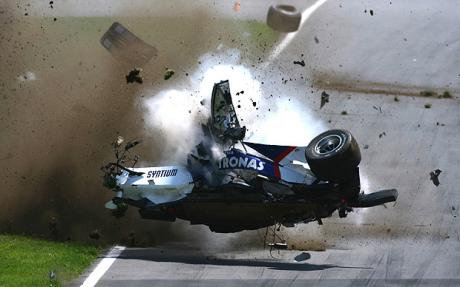 Other safety devices included within today’s f1 tubs include, • Roll over hoop made of metal or composite materials • Seat belts consist of six-point harnesses, which must be able to be released with a single hand movement • Increased cockpit dimensions to ensure the ease of a drivers escape • Single plastic cast driver seats, which are tailored to ensure that optimal support is provided • Fire extinguisher system, which in the case of a fire will automatically spread foam around the chassis and engine area. • Accident data recorders are compulsory; this registers the important information such as speed and deceleration. • Mater switch which deactivates the vehicles electronics, fuel pumps and rear light Space frames (Brief description of what is space frame)? Listed below is a list of past and current road going vehicles using space frames; • Audi A8,R8 & TT RS • Ferrari 360 • Lamborghini Countach & Gallardo • Lotus Seven & Elise • Mercedes-Benz SLS AMG • Noble M600 • Saleen S7 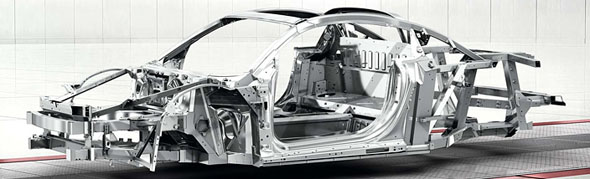 Listed below is a list of past and current racing cars, using space frames; • Ferrari D50 (1955-56) • Ginetta G20 • Lotus Type 51 (1967-68) • Maerati Tipo (1960) • Peugeot 205 T16 • Porsche 917k • Radical PR6  Aerodynamic Drag “The force on an object that resists its motion through a fluid is called drag. When the fluid is a gas like air, it is called aerodynamic drag (or air resistance). When the fluid is a liquid like water it is called hydrodynamic drag (but never "water resistance")." | Factors that can affect drag include; - Drag increases with speed - Shape of object in question - Surface area is of importance when dealing with viscous drag - Texture and viscosity - Compressibility - Lift and boundary layer separation 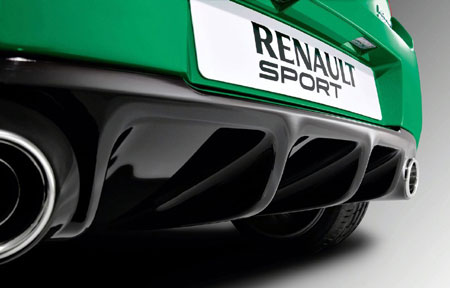 Areas which designers can make changes to improve vehicle aerodynamics include, rounding of edges around the front of the vehicle, tuning of the wheel openings, installing a rear spoiler, use of underside diffusers, installing active ride height adjustment, adjustments to the grill and fascia openings and reducing any large gaps within the vehicles body panels. This is just a small list of possible improvements that could be made to aid in the overall aerodynamics. In motorsport aerodynamic drag plays a much more vital role than that compared to road vehicle design. In comparison to the amount of drag created by an F1 car to a road going production vehicle, an F1 car manages creates between 0.7 to 1.1 Cd, depending on the circuit, whilst a road going Audi A4 will produce 0.31. This is a very large difference and this is why other aspects which much be considered, with regards to racing car aerodynamics include, minimizing lift and increasing downforce, this is done so to ensure that the race vehicle in question does not become airborne when racing at such high speeds.  “Cd (Drag coefficient or coefficient of drag) is an aerodynamic term that describes the car ability to cut through the air and the shape of the car will ultimately affect the overall top speed. The lower the Cd level, the lower the drag and more aerodynamic efficiency of a cars design (this is focused on drag reduction and not downforce).” About Downforce “A force produced by air resistance plus gravity that increases the stability of an aircraft or motor vehicle by pressing it downwards.” It is this downforce which pushes the race car into the road surface, which further increases the friction between the tyres and the road allowing for the vehicle to take corners at such high speeds, whilst allowing the driver full control. It is well known that today’s f1 race cars can weigh up to five times of their regular weight, when undergoing high levels of downforce. Though it allows vehicles to take corners at such high speeds, it also can be restrictive in terms of hindering the vehicles top speed, which again has a knock on effect as it then requires more power, which results in increased fuel consumption, which results in an increased level of emitted emissions. The It is for this reason that race cars will have a different aerodynamic set up for each circuit in which they race, as every circuit will have slightly different demands from the vehicle. It is this perfect balance of downforce and top speed, which has now resulted in the introduction of adjustable aerodynamic aids within F1, these allow the driver to manually adjust both front and rear wing angles from within the cockpit, whilst out racing on circuit. An example of such active aerodynamics, in this case drag reduction system(DRS) can be seen in the video clip provided above. |
