So What is Rolling Resistance? Rolling resistance is essentially how the tyre and the surface on which it rotates interact to slow down the speed of rotation. Factors which can affect rolling resistance include: • Tyre width – Either natural or caused by tyre pressure • Tyre surface – Including tread depth and design • Road surface condition – Weather dependent and quality of road surface • Tire/wheel radius – Larger wheels will endure less rolling resistance • Speed of rotation – Increase in speed travelled will result in increased rolling resistance • Tyre composition – Type of rubber, smooth, hard and degree of flex • Tyre pressure – Lower tyre pressure will result in higher rolling resistance and increased flexing of the tyre wall. 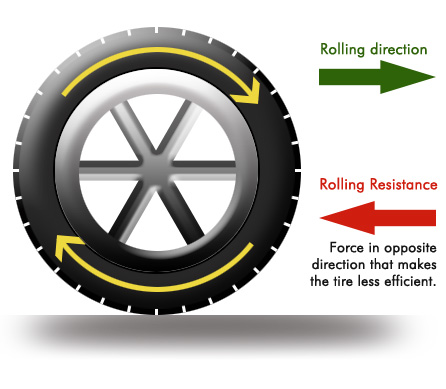
The higher the rolling resistance of a tyre, the more power that will be required from the vehicles engine to keep the car moving along. The more power used, the more fuel will be used, it all has a knock on effect. On average it has been calculated that up to 20% of a car's fuel consumption is used to overcome generated rolling resistance. “This also affects motoring costs, as well as the environment. As a rough guide, a six per cent increase in rolling resistance translates into a one per cent consumption rise.” It is for this reason that many of today’s tyre manufacturers aim to design tyres which can aid in decreasing tyre rolling resistance, by doing so not only will drivers be saving themselves a considerable amount of money on fuel costs, but it will also assist in providing a reduction in the vehicle pollution levels currently emitted. 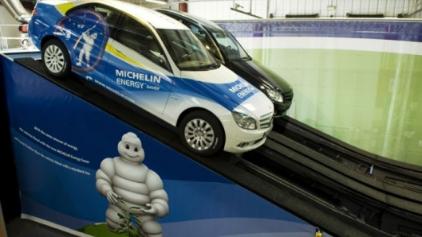
A simple way in which someone could measure the effect of increased or decreased tyre pressures on measured rolling resistance, could include filling the vehicle being tested with a specific amount of fuel and running it till empty on a variation of tyre pressures. By monitoring the miles per gallon gained on each run, this would provide the individual with visual evidence of a possible increase or decrease with the tyre pressures used. For such a test you would be expecting to notice a significant increase in fuel consumption, when running tyres on lower pressures, and possibly even signs of increased wear when compared to running on the manufacturer’s higher recommended pressures. Other systems currently used include letting a car to roll in neutral gear off a ramp in windless conditions. The distance measured in which the vehicle has travelled corresponds directly to the tyres rolling resistance. The smaller the distance travelled, the higher the rolling resistance.
The Development of Tyre Technology - The U.S. currently installs low rolling resistance tires to meet U.S. Corporate Average Fuel Economy (CAFE) standards. - In July 2008 the state of California put a polling resistance tyre regulation into effect; they are also currently looking at ways that vehicle manufacturers can inform consumers about selecting tyres that will offer the best fuel economy. - As of November 2012, Europe will be putting a rolling resistance rating system in place which will be mandatory. 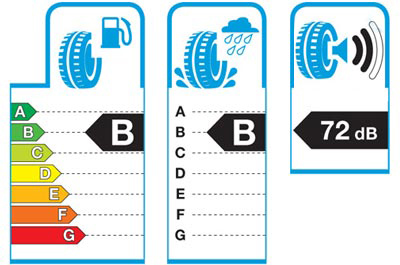
- The above regulation will require that tyres for private cars and light commercial vehicles, manufactured after 1st July 2012 and marketed in the EU from November 2012 onwards must carry a sticker or be accompanied with a leaflet at the point of sale. Information provided will include the energy efficiency rating, wet grip rating and external rolling noise rating. - The new European system will not apply for re-treaded tyres. Re-Treads “Re-treading means taking a worn casing of good structural quality, and putting it through a process, which completely renews the tread of the tyre and sometimes the sidewall rubber. The rebuilt tyre is then subjected to a curing process where the new rubber is vulcanised to the casing and the tread pattern is formed.” 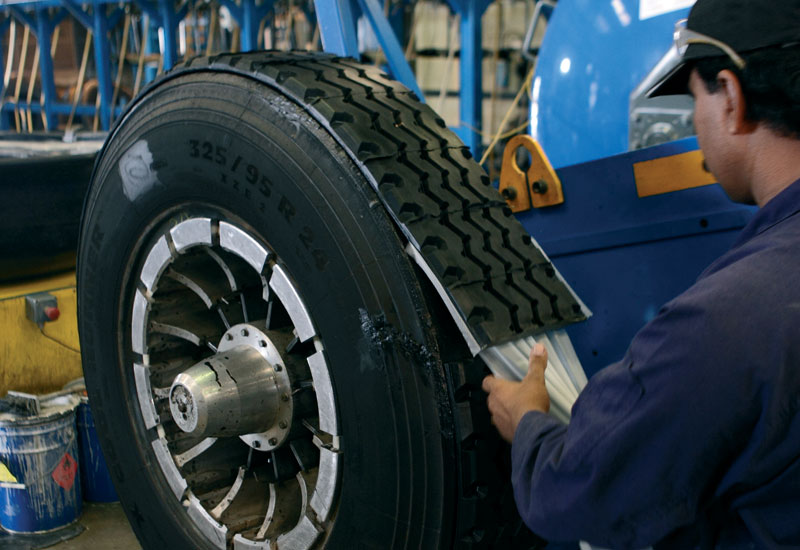
Advantages - Typically 30-50% less expensive than a new tyre - Environmentally friendly - Benefit to the environment due to the reuse of thrown away tyres etc. - The average new tyre requires 22 gallons of oil to process - Inspected just as thoroughly as new tyres before they are declared road worthy - Over 90% of all aircraft tyres are re-treads - “It should be noted that the majority of retreaded tyres in the UK have been manufactured in the UK. This drastically cuts down on shipping costs, fuel expenditure and additionally helps the UK economy." |
Disadvantages - Limited availability, more common for trucks and larger vehicles but not so much for smaller vehicles. - Limited performance, not suitable for high performance vehicles - Renowned for poor reliability, when used consistently. - They are often heavy, which can cause issues when balancing wheels with re-treaded tyres fitted - Often made in one type of tread design and have lower speed ratings
Though re-treaded tyres have received much negative feedback and opinions throughout the years, on further investigation we can see that the listed disadvantages are all argued to be incorrect on a variety of online sites and forums. The development of the technology used and quality of todays Re-treaded tyres, means that now they can even be found to be used on light commercial vehicles, aviation, 4 by 4’s and throughout the motorsport industry.
Motorsport & Tyre Pressures - Key to good grip is the size of the contact patch - The lower the pressure, the greater the contact patch, though this also results in an increased tyre temperature and increased physical distortion. - Lower tyre pressure will increase the rolling resistance, further increasing fuel consumption. - Lower tyre pressures are ideal for circuits that have few straights and significant corners, though this must not be too low as otherwise this will have a knock on effect regarding fuel efficiency. 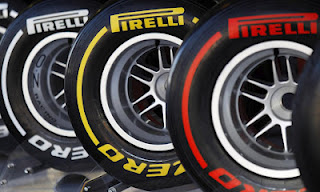
- Higher tyre pressure will decrease the rolling resistance, further decreasing fuel consumption. Though this will provide less grip around corners compared to lower pressure settings. - Higher pressures are ideal for high speed circuits in which there are long straights and few corners - By having firm tyre walls this will allow for greater pressure ranges to be used - Due to change in pressure within the tyre due to the tyre temperatures increasing when out on circuit, tyres are preheated so there is minimal difference when pressures are checked before and after the session. - Air pressure takes 70% of the load from the vehicle whilst 30% is taken by the tyre - Tyre pressure settings are not only judged by performance gains, but also are altered to the preference of the driver.
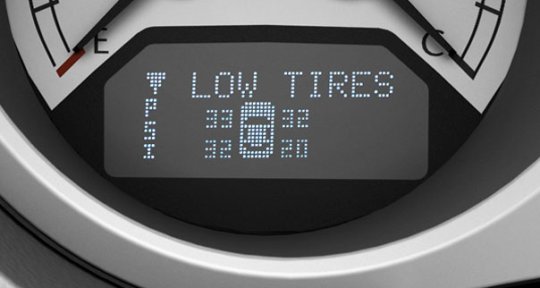
Monitoring Tyre Pressures Keeping a regular check on tyre pressures plays a vital role within owning and driving a vehicle. It has been noted that a 6psi drop in tyre pressure can lead to a 10% increase in fuel consumption whilst resulting in increased tyre wear. All of which not only adds to annual costs for today’s drivers, increases chances of blow outs, reduces braking performance, but also has a knock on effect of increased emissions.
It is because of reasons such as listed above that today we are witnessing the introduction of tyre pressure monitoring systems (TPMS). Such systems measure pressure and temperature information from each wheel and feed this information within the cockpit of the vehicle, further allowing the driver to be alerted in advance of possible low pressure readings without them having to physically check each wheel individually.
Direct TPMS - Pressure sensors are employed either internally or externally on each tire. - Physically measure tyre pressures and temperatures inside tyre - Problems include limited battery time and being exposed to the environment - Internal sensors are harder to get to in the case of battery changes etc. - The cost and availability of spare parts has led to much confusion and issues for customers and workstations Indirect TPMS - Air pressure measured by monitoring of individual wheel rotational speeds and other signals available outside of the tyre. - It cannot measure or display absolute pressure value - Does not involve any additional hardware, spare parts, electronic or toxic waste - Customer friendly and easy to handle due to not requiring regular servicing By making the installation of such TPMS systems mandatory
within today’s new vehicles, this I believe would personally assist in reducing
the level of emissions from today’s cars, whilst reducing the amount of
money spent annually on vehicle maintenance running. Not only would road cars
benefit, but also so would the Motorsport industry. Accurate tyre pressures are
proven to be a significant performance enhancer, the continuous monitoring of
temperature and pressure whilst out on circuit allows for the racing teams to
fully optimise the amount of performance gained.
The Future for Tyre Development - Reducing C02 emissions through increasing fuel efficiency - Mobility that is affordable, safe, reliable and sustainable - Significant information and labelling for tyre consumers - Increase of tyre material development - Next generation silica compounds and steel belt structures - By reducing the amount of heat emitted during the tyres rolling resistance this will reduce the tyres rolling resistance - Promoting the use of 100% sustainable materials - Development of synthetic rubber, carbon black, and rubber compounds created from biomass - Development and introduction of re-tread technologies within major tyre manufacturers
|